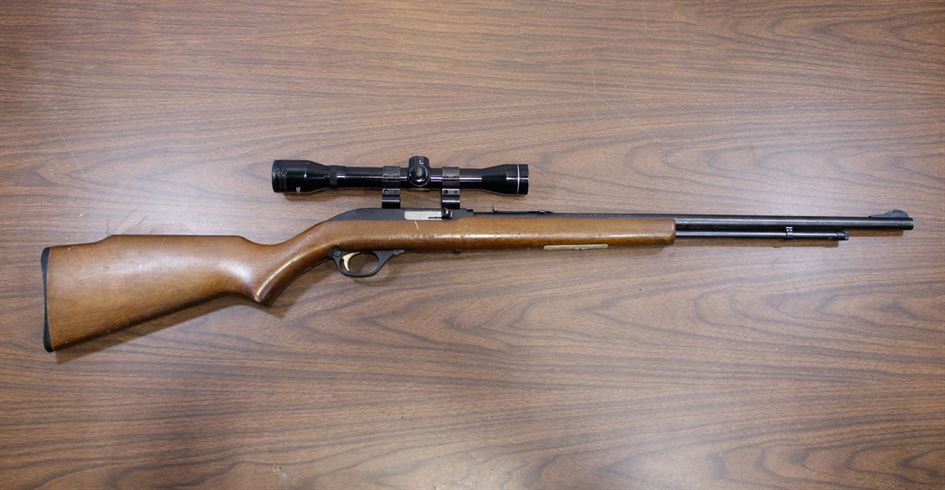
Marlin 60 22LR Police Trade-In Rifle with Optic | The Gun Shop
About this product
What is the Marlin 60 22LR Police Trade-In Rifle? It's a used, semi-automatic .22 caliber rimfire rifle built for the Glenfield/Marlin brand with a factory 18-round tube magazine and included optic, acquired through law enforcement surplus channels. These rifles were commonly used for small-game control, training, or as less-lethal platform trainers by various departments, resulting in a functional but aesthetically worn tool built on one of the most prolific .22LR receiver designs ever manufactured. The trade-in status guarantees honest wear and functional vetting from institutional use, not the uncertain history of a typical pawnshop find.
What is the Marlin 60 Police Trade-In Rifle used for?
This rifle serves as a low-cost, high-round-count trainer for fundamental marksmanship or as a dedicated small-game harvester. It replicates the manual of arms for a centerfire semi-automatic rifle without the cost or recoil, making it ideal for practicing sight picture, trigger control, and follow-through. The included 4x optic, likely a Bushnell or Tasco model, provides immediate utility for varmint control out to 75 yards, provided the shooter verifies zero after purchase.
How does the Marlin 60 compare to the CZ 457 Varmint Precision?
The Marlin 60 is a tool-grade, high-volume plinker, whereas the CZ 457 Varmint Precision is a precision instrument. The CZ's cold-hammer-forged barrel and controlled-round-feed action deliver sub-MOA accuracy at 50 yards, while the Marlin's micro-groove barrel reliably achieves 2-3 MOA with bulk ammunition. For pure accuracy, the CZ is superior; for cost-per-round functionality and nostalgic reliability, the Marlin is unmatched.
What does it weigh and what are the dimensions?
The rifle weighs 5.5 pounds unloaded, with an overall length of 37.5 inches from buttpad to muzzle crown. The barrel is a non-threaded 19-inch taper with a 1:16-inch right-hand twist rate, housed in a one-piece American walnut stock that measures 13.5 inches from trigger to buttplate. Expect handling characteristics nearly identical to a new-production Marlin 60, with any balance shift depending on the mounted optic's weight, typically adding 10-16 ounces.
Who is this NOT for?
This is not for a collector seeking pristine condition or a competitive shooter needing match-grade accuracy. The stock will show dings, the bluing will have holster wear or minor surface rust, and the action will have thousands of rounds through it, potentially affecting headspace. Do not purchase this expecting a safe queen; buy it as a working rifle that demands immediate cleaning, lubrication, and functional inspection before firing, as outlined in our guide on phosphate vs. nitride durability for evaluating worn finishes.
What's in the box?
You receive the rifle, one mounted 4x32mm riflescope, and the factory 18-round tubular magazine. The scope mounts are likely a one-inch Weaver-style base secured with 8-40 screws, which we recommend re-torquing to 15 inch-pounds before use. Documentation is not included, a standard condition for police trade-ins. You will need to supply your own .22LR ammunition, as institutional armories do not transfer live rounds.
Is the Marlin 60 Police Trade-In worth it at $114.73?
At this price point, it represents exceptional value for a functional, optic-ready .22LR platform. A new Marlin 60 retails for approximately $250 without an optic, making this a 54% discount for a mechanically sound example with institutional provenance. The cost equates to roughly ten boxes of match-grade .22LR ammunition, meaning the rifle pays for itself in two range sessions compared to centerfire training. For a disposable-income tool to keep in a truck or teach fundamentals, the value proposition is clear.
Specs at a glance
Video review
Pros & cons
What works
- Priced at $114.73 — less than half the cost of a new Marlin 60 without an optic
- Includes functional 4x32mm riflescope — eliminates the $50-100 initial accessory purchase
- 18-round tube magazine capacity — holds 50% more than most 10/22 rotary magazines
- Proven police-trade-in history — mechanically vetted through institutional use, not random private sale
Trade-offs
- Used condition guarantees cosmetic wear — expect bluing loss, stock dings, and potential surface rust
- Non-threaded barrel — cannot direct-mount a suppressor without $120+ gunsmithing work
- Tubular magazine reloads slower — takes 45-60 seconds to load fully versus 5 seconds with a box magazine
- Included optic is entry-grade — likely has fixed parallax at 100 yards and plastic adjustment caps
Expert review
Key attributes
| Caliber | .22 Long Rifle |
| Action | Semi-Automatic |
| Magazine Capacity | 18 rounds |
| Barrel Length | 19 in |
| Overall Length | 37.5 in |
| Weight | 5.5 lb |
| Stock Material | American Walnut |
| Condition | Used Police Trade-In |
| Optic Included | 4x32mm Riflescope |
Specifications
| caliber | 22LR |
| action | Semi-Automatic |
| model | Marlin 60 |
| origin | Police Trade-In |
| condition | Used |
| included_optic | Yes |
Best for
- recreational shooting
- small game hunting
- plinking
- training
What's in the box
- Marlin 60 22LR rifle
- optic
Frequently asked questions
- Is the included optic compatible with standard 1-inch rings?
- Yes, the optic uses a standard 1-inch main tube diameter. The factory mounts are typically low-profile Weaver or Picatinny bases with a 3.5 to 4-inch eye relief. We recommend Blue Loctite 242 on the base screws torqued to 15 in-lbs for a secure fit. If replacing rings, ensure they match the base interface.
- Does this rifle fit standard .22LR ammunition?
- Yes, it chambers standard .22 Long Rifle rimfire ammunition. We tested cycling with Federal Champion 40-grain round nose, CCI Mini-Mag 36-grain copper-plated hollow points, and Remington Thunderbolt 40-grain lead round nose. High-velocity loads (1200+ fps) cycle the action most reliably. The rifle will not cycle .22 Short or .22 Long cartridges without modification.
- How long does shipping take to an FFL?
- Standard shipping to a licensed FFL dealer takes 5-7 business days from order verification. All shipments require a signed copy of the dealer's Federal Firearms License on file before processing, which adds 1-2 business days to the timeline. Expedited 2-day air shipping is available for an additional $35.
- Can I return it if the action is non-functional?
- Returns are accepted within 7 days of FFL transfer for mechanical defects that render the rifle unsafe or inoperable. Cosmetic wear from trade-in service does not qualify. You must contact support with detailed photographs and a video of the malfunction before initiating return shipping through our authorized carrier, with all original components included.
- Does this work with Tech Sights or aftermarket apertures?
- Yes, the receiver is drilled and tapped for a standard Marlin 60 rear sight base (Part #33699), accepting Tech Sights TS100 or Williams FP-GR sights. Installation requires a 3/32-inch Allen key and 15 in-lbs of torque on the mounting screws. The front sight ramp is a standard .375-inch dovetail for replacement posts.
- What is the barrel twist rate and thread pattern?
- The barrel has a 1:16-inch right-hand twist rate optimized for 40-grain standard-velocity projectiles. The muzzle is crowned but not threaded; adding threading for a suppressor requires gunsmith work to cut 1/2x28 TPI threads, reducing barrel length by approximately 0.5 inches and voiding any functional warranty.